Advertiser Disclosure — This site may receive compensation when you click links and apply for credit cards. Compensation may impact which products appear and their placement. We strive to provide accurate information but cannot guarantee all details are current. Always verify terms with the card issuer before applying. Full disclosure
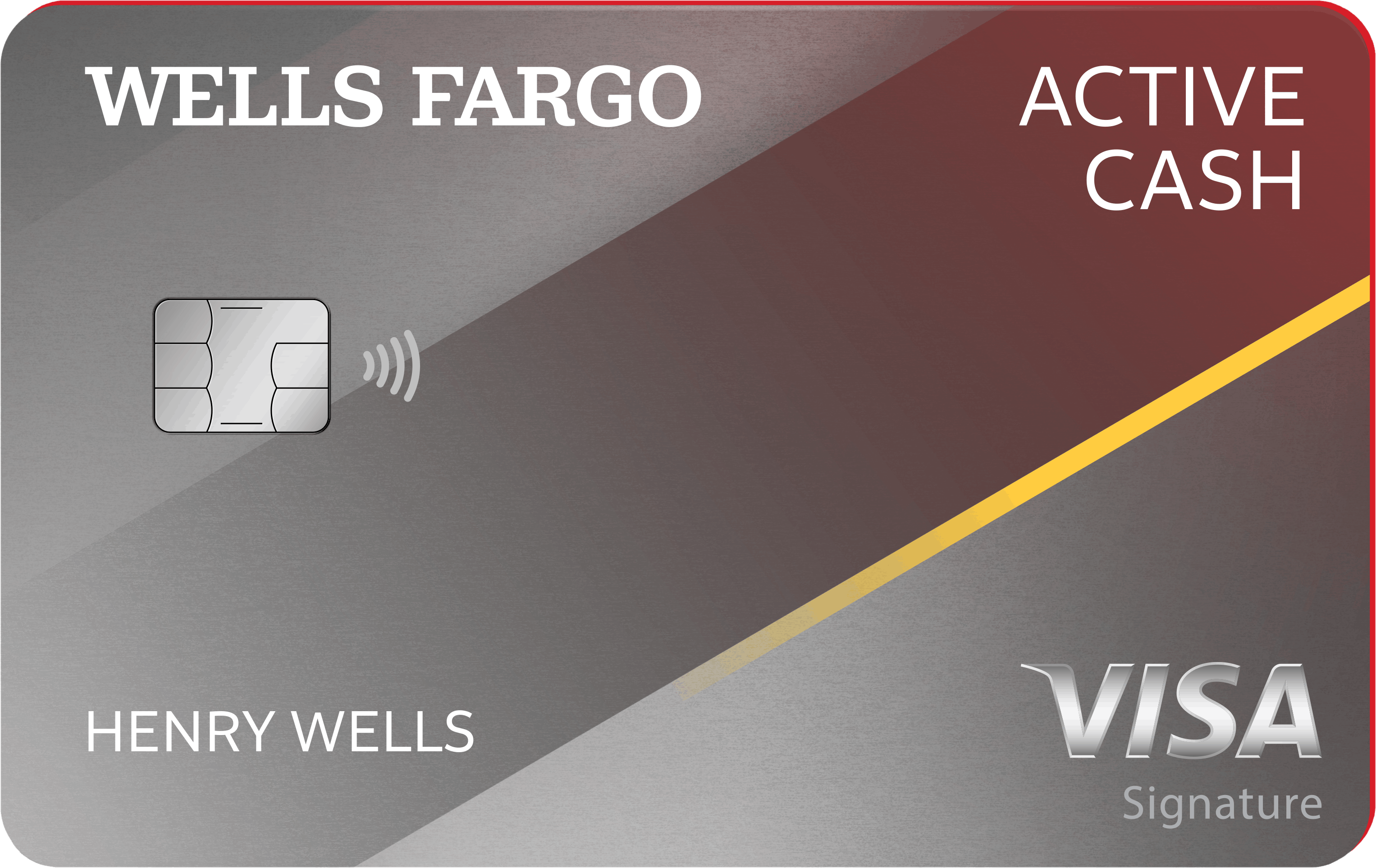
The best cash back credit card in 2026 is the Active Cash
($0/yr annual fee, 2.0x base rewards). We compared 15 cash back cards —
including flat-rate, rotating category, and no-annual-fee options — across cash back percentage,
annual fee value, statement credit redemption, and welcome bonus. Your best card depends on
whether you prefer a flat rate on all purchases or higher rotating category bonuses.
Not sure which cash back card fits your spending?
Answer 3 quick questions and get a personalized recommendation.
#1. Active Cash — Best for Flat-Rate Maximizers Who Want The Highest Rate On All Spending
The Active Cash from Wells Fargo carries no annual fee and earns 2.0x cash back on all purchases at baseline. The welcome bonus (20,000 points) adds extra value in year one. This card reports to all three major credit bureaus and has no minimum redemption threshold — cash back posts as a statement credit or direct deposit with no expiration.
#2. Freedom Unlimited — Best for Everyday Spenders Who Want Above-Average Cash Back On All Purchases
The Freedom Unlimited from Chase carries no annual fee and earns 1.5x cash back on all purchases at baseline. The welcome bonus ($200 cash back) adds extra value in year one. This card reports to all three major credit bureaus and has no minimum redemption threshold — cash back posts as a statement credit or direct deposit with no expiration.
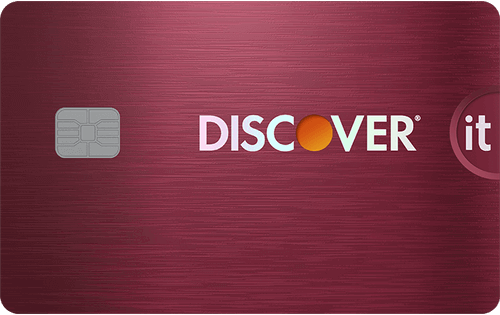
#3. Discover it® Cash Back — Best for Cash Back Earners Who Want A Simple Rewards Card With No Annual Fee
The Discover it® Cash Back from Discover carries no annual fee and earns 1.0x cash back on all purchases at baseline. The welcome bonus (Unlimited Cashback Match) adds extra value in year one. This card reports to all three major credit bureaus and has no minimum redemption threshold — cash back posts as a statement credit or direct deposit with no expiration.
#4. Double Cash — Best for Cash Back Earners Who Want A Simple Rewards Card With No Annual Fee
The Double Cash from Citi carries no annual fee and earns 1.0x cash back on all purchases at baseline. The welcome bonus ($200 cash back) adds extra value in year one. This card reports to all three major credit bureaus and has no minimum redemption threshold — cash back posts as a statement credit or direct deposit with no expiration.
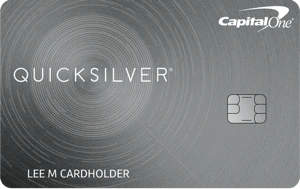
#5. Quicksilver — Best for Cash Back Earners Who Want A Simple Rewards Card With No Annual Fee
The Quicksilver from Capital One carries no annual fee and earns 1.0x cash back on all purchases at baseline. The welcome bonus ($200 cash back) adds extra value in year one. This card reports to all three major credit bureaus and has no minimum redemption threshold — cash back posts as a statement credit or direct deposit with no expiration.
The two main types of cash back cards operate very differently. A flat-rate card earns the same
percentage on every purchase — typically 1.5% to 2% — with no activation required and no spending
cap. You earn 2% whether you buy groceries, gas, or airline tickets. This simplicity is why flat-rate
cards like the Citi Double Cash and Wells Fargo Active Cash are the most popular cash back cards for
everyday spenders.
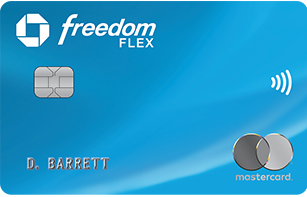
Rotating category cards (Chase Freedom Flex, Discover it Cash Back) earn 5% on specific merchant
categories that rotate every three months. The catch: you must activate the bonus each quarter, and
the 5% rate is capped at $1,500 in spending per quarter ($75 max bonus). Outside the active category,
you earn 1%. These cards require more management but can deliver higher total cash back if your
spending aligns with the quarterly categories.
The math favors rotating cards only if you spend heavily in the active category. On $1,500 in the
active category, you earn $75 at 5% — vs. $30 on a 2% flat-rate card. But most people don't hit
the cap, and the required activation adds friction. For most households, the best strategy is
pairing a flat-rate card for everyday spending with a rotating card for bonus categories.
See our detailed breakdown: Flat-Rate vs. Rotating Cash Back Cards
and How to Maximize Cash Back Rewards.
When Does a Cash Back Card's Annual Fee Pay Off?
Premium cash back cards charge $95 to $550/yr in exchange for higher category rates or statement
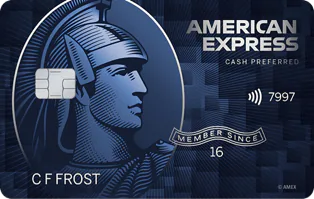
credits. The Blue Cash Preferred from Amex charges $95/yr but earns 6% at U.S. supermarkets —
vs. 1-2% on no-fee cards. The break-even calculation: divide the annual fee by the cash back
rate differential. At 4% extra earnings (6% minus 2% base), you need to spend $95 / 0.04 =
$2,375 at supermarkets annually to justify the fee.
For most people, the math doesn't support paying an annual fee for a cash back card — because
the category rates are capped. The Blue Cash Preferred's 6% grocery rate applies only to the
first $6,000/yr in supermarket spending. After that, the rate drops to 1%, making it equivalent
to a no-fee card. Only spenders who max the grocery cap ($6,000/yr = $360 back, minus $95 fee
= $265 net) come out ahead of a comparable 2% flat-rate card ($6,000 × 2% = $120 net).
Bottom line: consider a fee-carrying cash back card only if you have high, concentrated spending
in a specific category the card rewards heavily. Otherwise, a no-fee 2% flat-rate card is almost
always the better financial choice. See our full analysis:
Is a Cash Back Card's Annual Fee Worth It?
and our best cash back strategy for 2026.
Frequently Asked Questions
What is the best cash back credit card right now? +
The Active Cash is our top-ranked cash back card for 2026. It earns 2.0x on all purchases with a $0/yr annual fee. For rotating category maximizers, the Chase Freedom Flex and Discover it Cash Back both offer 5% on quarterly categories.
What credit card gives the most cash back? +
Cards with rotating 5% categories — like Chase Freedom Flex and Discover it Cash Back — offer the highest raw cash back rate but require activation each quarter. For a flat-rate maximum, the Wells Fargo Active Cash and Citi Double Cash both offer 2% on everything with no annual fee.
Is 2% cash back on everything good? +
Yes. A 2% flat-rate card is excellent for most people. On $30,000 in annual spending, 2% returns $600/yr — better than the average rewards card at 1-1.5%. Flat-rate cards also eliminate the mental overhead of tracking bonus categories. The Citi Double Cash (1% when you buy, 1% when you pay) and Wells Fargo Active Cash are the two leading 2% flat-rate options with no annual fee.
What is the difference between cash back and rewards points? +
Cash back is a straightforward rebate — you spend $100 and get $1-5 back as statement credit, direct deposit, or gift cards. Rewards points have variable value: they might be worth 1 cent each redeemed for cash, but 2-5 cents each when transferred to airline or hotel partners. Cash back is simpler; points can be more valuable if you optimize redemptions.
How does rotating category cash back work? +
Rotating category cards (Chase Freedom Flex, Discover it Cash Back) offer 5% cash back on specific spending categories that change every three months. Each quarter you must activate the bonus — either online or via the issuer's app. Common categories include grocery stores, gas stations, Amazon, restaurants, and PayPal. Purchases outside the active category earn 1% base rate.
What is the 5/24 rule for cash back cards? +
Chase's 5/24 rule means Chase will decline your application if you've opened 5 or more credit cards (from any issuer) in the past 24 months. This affects all Chase cash back cards including Freedom Unlimited, Freedom Flex, and Ink Business Cash. To maximize your Chase cards, apply for them before opening cards from other issuers.
Do cash back cards affect your credit score? +
Applying for any credit card — including cash back cards — triggers a hard inquiry that may temporarily lower your score by 5-10 points. Over time, a new card can help your score by lowering your overall credit utilization and adding to your credit mix. The key is to pay in full each month to avoid interest charges that far outweigh any cash back earned.
What is the best no annual fee cash back card? +
The Citi Double Cash and Wells Fargo Active Cash are the top no-annual-fee cash back cards at 2% on everything. For category bonuses at no annual fee, Chase Freedom Flex offers 5% on rotating categories and 3% on dining and drugstores. The Discover it Cash Back matches all cash back earned in your first year, effectively doubling your rewards with no annual fee.
How do I redeem cash back rewards? +
Most issuers let you redeem cash back as a statement credit, direct deposit to a bank account, check, or gift cards. Statement credit is the most common: it reduces your outstanding balance. Some cards (Chase, Discover) let you apply cash back to purchases at checkout — Amazon Pay and PayPal both support this. Minimum redemption thresholds vary: many cards allow redemption starting at $1.
Is flat rate or rotating categories better? +
For most people, flat rate is better. It requires zero management — you earn the same rate on every purchase, every day. Rotating categories earn more (5% vs 2%) but only on $1,500 in spending per quarter ($6,000/yr), capped at $75 max bonus per quarter. The best strategy: use a rotating card for its active category, a flat 2% card for everything else.
What is unlimited cash back? +
Unlimited cash back means there is no cap on how much you can earn. Some cards cap bonus category earnings — for example, 5% on the first $1,500 in purchases per quarter. An unlimited cash back card like the Wells Fargo Active Cash or Chase Freedom Unlimited lets you earn 1.5-2% on every purchase without any spending limits or activation requirements.
How long does it take to get cash back rewards? +
Cash back typically posts to your account within 1-2 billing cycles after the purchase posts. Most issuers make it available for redemption once your statement closes. Some cards — including Chase — post rewards after the purchase clears, making them available within days. Welcome bonuses generally post 6-8 weeks after meeting the spending requirement.
What is the best cash back card for groceries? +
The Blue Cash Preferred from American Express earns 6% at U.S. supermarkets (on first $6,000/yr, then 1%) — the highest grocery rate of any personal card. It carries a $95/yr fee, but $6,000 in grocery spending at 6% = $360 in cash back. For no-annual-fee grocery rewards, the Blue Cash Everyday earns 3% at U.S. supermarkets (up to $6,000/yr, then 1%).
Add this cash back card comparison to your website or blog:
<iframe src="https://www.pointspick.com/best-credit-card-for-cashback" width="100%" height="600" frameborder="0" title="Best Cash Back Credit Cards"></iframe>
Our Methodology
Our cash back card rankings use a composite scoring model: base reward rate (40 points),
no annual fee (25 points), signup bonus presence (10 points), major issuer reputation (5 points),
and editorial curation for proven top performers (15 points). We pull data from
35+ independent verified sources. Rankings are computed algorithmically
with no affiliate influence on card placement or scoring.
Last verified: April 2026.
Full methodology.
PointsPick may earn a commission when you apply through our links.
Full disclosure