We ranked 15 travel rewards cards using a composite score that weights transfer partner
access (30 points), no foreign transaction fee (15 points), annual fee tier (5–30 points),
welcome bonus presence (10 points), issuer reputation (5 points), and editorial curation (20 points).
Data sourced from 35+ verified sources, updated monthly.
Quick Answer
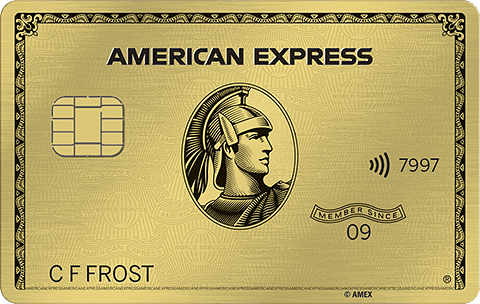
The best travel credit card in 2026 is the American Express® Gold Card
($325/yr annual fee, 1.0x base rewards, transfers to airline/hotel partners, no foreign transaction fee).
We ranked 15 travel rewards cards by transfer partner access, base reward rate,
welcome bonus value, foreign transaction fee, and annual fee relative to benefits.
Key factors: transfer partners (redeemable for 2-5 cents/point),
no foreign transaction fee (saves 1-3% abroad),
and welcome bonus (often worth $600-$1,200).
Not sure which travel card fits your style?Answer 5 questions — get a personalized recommendation.
Earn travel rewards at zero annual cost. Best for occasional travelers who want points flexibility
without paying a fee. The Bilt Mastercard
leads this tier with transfer partners and rent rewards. See our dedicated guide:
Best Travel Cards With No Annual Fee.
Premium cards earn premium rewards — but only if you use the credits that offset the annual fee.
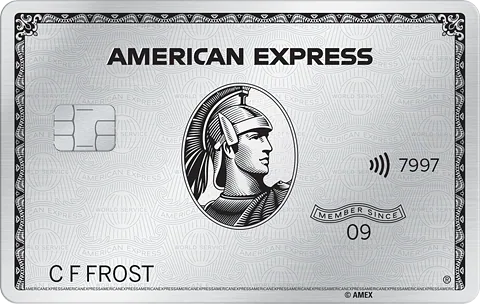
The Amex Platinum ($695/yr)
and Chase Sapphire Reserve
($795/yr) both provide lounge access, travel credits, and 3x+ on travel spending.
Transferable points (Chase Ultimate Rewards, Amex Membership Rewards, Capital One Miles) are
flexible currencies you can move to 10-20+ airline and hotel partners. When you find a good
redemption — say, business class to Europe on United using transferred Chase points — you can
extract 3-5 cents per point vs. 1 cent in cash back. That flexibility is the core value proposition
of travel credit cards over cash back cards.
Airline miles (Delta SkyMiles, United MileagePlus, American AAdvantage) are program-specific.
They earn faster on co-branded cards but can only be redeemed within that airline's ecosystem.
Miles can still be valuable — especially for international premium cabin awards — but they're
subject to airline devaluation and award availability restrictions that transferable points avoid.
For most travelers, transferable points from the Sapphire Preferred or Venture X offer better
long-term value than airline miles. For frequent flyers loyal to one airline, a co-branded card
stacks better with elite status benefits. Deep dive:
Travel Points vs. Miles — Which Is Worth More?
How Transfer Partners Work
When you transfer credit card points to an airline or hotel loyalty program, you're converting
your flexible currency into that program's miles or points — usually at a 1:1 ratio. Chase
transfers to United MileagePlus at 1:1, so 50,000 Chase points become 50,000 United miles.
Those United miles might then book a $1,200 flight in economy or a $6,000 business class
ticket — extracting far more than the 1-cent-per-point cash back value.
The key is finding high-value redemptions before you transfer. Points are much harder to move
back once transferred. Research award availability, compare partner valuations, and only transfer
when you have a specific redemption in mind. The major programs and their estimated point values:
Chase Ultimate Rewards (1.5-2.0 cpp via partners), Amex Membership Rewards (1.2-2.0 cpp),
Capital One Miles (1.2-1.7 cpp), Bilt Points (1.2-2.0 cpp).
The American Express® Gold Card is our top-ranked travel card for 2026. It earns rewards on travel and everyday spending, transfers points to airline and hotel partners, and charges no foreign transaction fee. Strong alternatives include the Chase Sapphire Reserve and Capital One Venture X for premium travelers.
Which credit card is best for earning airline miles? +
For transferable points that convert to airline miles, the Chase Sapphire Preferred and Sapphire Reserve both transfer to United, Southwest, and 10+ other airline partners. For airline-specific miles, the Delta SkyMiles Gold (Amex) and United Explorer Card (Chase) earn bonus miles on their respective airlines. Transferable points programs offer more flexibility than co-branded airline cards.
What is a good travel card for beginners? +
The Chase Sapphire Preferred ($95/yr) is the best travel card for beginners. It earns 3x on dining, 2x on travel, transfers to 14 partners, and offers a 60,000-point welcome bonus worth $750 through Chase Travel. The Capital One Venture Rewards ($95/yr) is a simpler alternative that earns 2x miles on everything with flexible redemption against travel purchases.
What are travel transfer partners? +
Transfer partners are airlines and hotels where you can move your credit card points at a fixed ratio — usually 1:1. Chase Ultimate Rewards transfers to United, Hyatt, Southwest, and 11 more. Amex Membership Rewards transfers to Delta, Air Canada, British Airways, and 20+ others. Capital One Miles transfer to Turkish Airlines, Avianca, Air Canada, and Wyndham. Transferring to premium cabin awards can yield 3-5 cents per point vs. 1 cent for cash back.
How does no foreign transaction fee help travelers? +
Most credit cards charge a 1-3% foreign transaction fee on purchases made outside the US. On a $5,000 international trip, that's $50-$150 in fees. Travel credit cards — including all Chase Sapphire, Capital One Venture, and Amex Platinum cards — waive this fee entirely. If you travel internationally even once per year, a no-FX fee card pays for itself compared to a standard rewards card.
Is the Chase Sapphire Preferred worth it in 2026? +
Yes. The Chase Sapphire Preferred ($95/yr) remains one of the best-value travel cards in 2026. It earns 3x on dining, 2x on travel, and 1.5x on all other purchases. Points are worth 1.25 cents through Chase Travel or can be transferred to 14 airline and hotel partners at 1:1 for potentially higher value. The welcome bonus alone (typically 60,000 points = $750) offsets the annual fee for 7+ years.
What credit score do I need for a travel card? +
Most premium travel cards require a good to excellent credit score — typically 700+ for the Chase Sapphire Preferred or Capital One Venture, and 720+ for the Amex Platinum or Chase Sapphire Reserve. Some mid-range travel cards like the Capital One VentureOne accept scores in the 670-699 range. If your score is below 670, start with a no-annual-fee card to build credit before applying for a travel card.
What is the difference between points and miles? +
Points (Chase Ultimate Rewards, Amex Membership Rewards, Capital One Miles) are flexible currencies that can be redeemed for travel, cash back, or transferred to multiple airline and hotel programs. Miles are typically airline-specific (Delta SkyMiles, United MileagePlus) and can only be redeemed on that airline or its partners. Transferable points generally offer more flexibility and higher potential value than airline-specific miles. See our guide: Travel Points vs. Miles explained.
Is the Amex Platinum card worth the annual fee? +
The Amex Platinum's $695/yr annual fee is worth it only if you use the credits and benefits. The card offers: $200 airline fee credit, $200 hotel credit, $189 CLEAR credit, $155 Walmart+ credit, $100 Global Entry/TSA credit, and access to 1,400+ airport lounges worldwide via Priority Pass and Centurion Lounges. If you use all credits, the effective cost drops below $0. If you don't travel frequently, the Chase Sapphire Preferred at $95 is a better value.
What is the best travel card with no annual fee? +
The Bilt Mastercard is the best no-annual-fee travel card in 2026 — it earns points on rent (up to $50,000/yr) and transfers to United, Hyatt, and 12+ partners at 1:1. The Capital One VentureOne ($0/yr) earns 1.25x miles on everything with transfer partners. For a straightforward no-fee option, the Bank of America Travel Rewards card earns 1.5x on all purchases with no FX fees.
How do I earn the most points on travel purchases? +
Maximize travel points by: (1) using a card with bonus travel multipliers — the Sapphire Reserve earns 10x on Chase Travel, 3x on all other travel; (2) booking through your card's travel portal for additional multipliers; (3) adding an authorized user to double points on their spending; (4) meeting welcome bonus minimum spend to earn the sign-up bonus; (5) using your card for everyday spending that earns 2x+ base rate. See our full guide: How to Maximize Travel Rewards.
Can I use travel rewards for cash back? +
Yes, but at a reduced value. Chase Ultimate Rewards points are worth 1 cent each as cash back vs. 1.25-1.5 cents through Chase Travel. Capital One Miles redeem at 0.5 cents each for cash back vs. 1 cent for travel statement credits. Amex Membership Rewards points are worth 0.6 cents as cash back vs. 1+ cents for flights. For maximum value, always redeem travel rewards for travel rather than cash back.
What is the best travel card sign-up bonus? +
The best current travel card welcome bonuses in 2026: Chase Sapphire Preferred (60,000 points = $750 in travel), Capital One Venture X (75,000 miles = $750), and Amex Platinum (80,000-100,000 points on targeted offers). A 60,000-point bonus is worth $600-$1,200 depending on how you redeem — portal redemption at 1-1.5 cents vs. partner transfer at 2-5 cents. See our full guide: How to choose a travel card sign-up bonus.
Our travel card rankings use a composite scoring model that weights transfer partner access
(30 points), no foreign transaction fee (15 points), annual fee tier relative to benefits
(5–30 points), welcome bonus presence (10 points), issuer reputation (5 points), and editorial
curation of known top travel cards (20 points). We pull data from 35+
independent verified sources. Rankings are computed algorithmically with no affiliate influence
on placement. Last verified: April 2026.
Full methodology.
PointsPick may earn a commission when you apply through our links.
Full disclosure